
Hi.
I am Tania paul. Professional Dancer.
A JOURNEY OF EXPRESSIOJ THOUGH BHARATANATYAM AND KATHAK
Stay Connected
Rooted in the rich traditions of Kathak and Bharatanatyam, their journey honors rhythm, grace, and storytelling.
Trained in classical discipline, they weave intricate footwork, expressive abhinaya, and sacred geometry.
Each performance bridges devotion and artistry, carrying centuries of Indian classical dance onto the stage.
Biography
Supreme Interpreter Of The Classical Dance
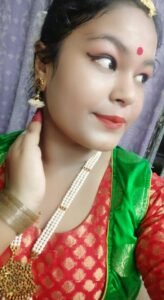
Tania is a spirited 19-year-old dance enthusiast whose heart truly comes alive in motion. As a first-time student, she embraces every lesson with openness, joy, and an eagerness to grow. Though new to formal dance training, her natural rhythm and love for movement inspire her to explore the expressive world of dance with confidence and curiosity.
With each step, Tanya discovers more about her own potential — blending dedication with creativity as she journeys deeper into the art form. Her passion is rooted not just in performance, but in the freedom and joy that dance brings to her life. As she continues to learn and evolve, Tanya’s energy and commitment shine through, promising a bright and fulfilling path in the world of dance.
Discography
Latest Album
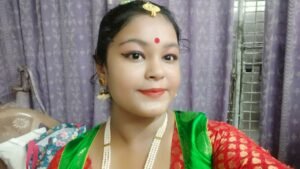
passionate dancer whose movement speaks where words fall silent.
From her first steps, she fell in love with rhythm, expression, and the joy that dance brings to every moment.
Her performances blend dedication, heart, and a vibrant energy that invites audiences into her world of fluid motion and emotion
KARTHAK
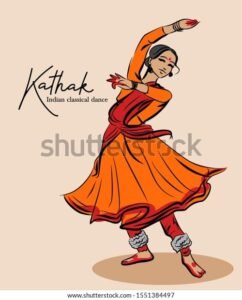
The name Kathak comes from the Sanskrit word katha, meaning “story,” reflecting its roots in ancient storytellers called Kathakars.
Bharatnatyam
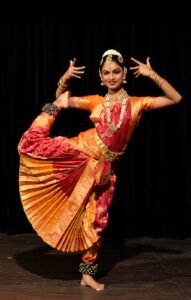
Bharatanatyam is one of India’s oldest and most celebrated classical dance forms, originating in the temples of Tamil Nadu in South India.
It has roots in ancient Sanskrit texts like the Natya Shastra and expresses spiritual ideas, devotional themes, and stories through movement.
Originally known as Sadiraattam and performed by temple dancers, it was formalised as Bharatanatyam in the early 20th century to give the art renewed respect and recognition.
Bharatanatyam combines rhythmic footwork, expressive gestures (mudras), and vivid facial expressions to convey emotions and narratives.
Its performance includes structured sequences such as Alarippu, Jathiswaram, Varnam, and Tillana, each blending technique and storytelling.
The dancer’s posture often includes a bent‑knee stance and precise upper‑body control, creating sculptural and elegant poses.
Music from the Carnatic tradition accompanies the dance, with instruments like mridangam, veena, and flute.
Traditionally performed solo, Bharatanatyam has evolved to include both male and female dancers worldwide.
Its revival in the 20th century was championed by pioneers like Rukmini Devi Arundale, who brought it from temple courtyards to global stages.
Today, Bharatanatyam remains a vibrant and evolving art form celebrated for its grace, discipline, and deep cultural heritage.
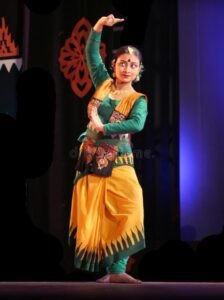 Robindro Nerito dance
He began writing at a young age and went on to become one of the most influential literary figures of the early 20th century.
Bharatanatyam is one of India’s oldest and most celebrated classical dance forms, originating in the temples of Tamil Nadu in South India.
It has roots in ancient Sanskrit texts like the Natya Shastra and expresses spiritual ideas, devotional themes, and stories through movement.
Originally known as Sadiraattam and performed by temple dancers, it was formalised as Bharatanatyam in the early 20th century to give the art renewed respect and recognition.
Bharatanatyam combines rhythmic footwork, expressive gestures (mudras), and vivid facial expressions to convey emotions and narratives.
Its performance includes structured sequences such as Alarippu, Jathiswaram, Varnam, and Tillana, each blending technique and storytelling.
The dancer’s posture often includes a bent‑knee stance and precise upper‑body control, creating sculptural and elegant poses.
Music from the Carnatic tradition accompanies the dance, with instruments like mridangam, veena, and flute.
Traditionally performed solo, Bharatanatyam has evolved to include both male and female dancers worldwide.
Its revival in the 20th century was championed by pioneers like Rukmini Devi Arundale, who brought it from temple courtyards to global stages.
Today, Bharatanatyam remains a vibrant and evolving art form celebrated for its grace, discipline, and deep cultural heritage.
Bharatanatyam is one of India’s oldest and most celebrated classical dance forms, originating in the temples of Tamil Nadu in South India.
It has roots in ancient Sanskrit texts like the Natya Shastra and expresses spiritual ideas, devotional themes, and stories through movement.
Originally known as Sadiraattam and performed by temple dancers, it was formalised as Bharatanatyam in the early 20th century to give the art renewed respect and recognition.
Bharatanatyam combines rhythmic footwork, expressive gestures (mudras), and vivid facial expressions to convey emotions and narratives.
Its performance includes structured sequences such as Alarippu, Jathiswaram, Varnam, and Tillana, each blending technique and storytelling.
The dancer’s posture often includes a bent‑knee stance and precise upper‑body control, creating sculptural and elegant poses.
Music from the Carnatic tradition accompanies the dance, with instruments like mridangam, veena, and flute.
Traditionally performed solo, Bharatanatyam has evolved to include both male and female dancers worldwide.
Its revival in the 20th century was championed by pioneers like Rukmini Devi Arundale, who brought it from temple courtyards to global stages.
Today, Bharatanatyam remains a vibrant and evolving art form celebrated for its grace, discipline, and deep cultural heritage.
Photo Gallery
In pharetra a felis odio eleifend hendrerit adipiscing id nulla sapien, ullamcorper ac, varius leo tellus sagittis consectetur egestas tortor, enim arcu blandit diam.leo.